Sensors for intelligent lighting control
SENSORISTICA
The Sensor Technology category at Digimax includes a range of professional ZETAQLAB sensors designed for advanced lighting control in industrial, commercial, and smart building environments.
Based on standard technologies such as Zigbee Direct, Casambi, and DALI‑2, these devices enable the implementation of advanced lighting management systems, improving visual comfort, energy efficiency, and design flexibility.
ZETAQLAB solutions represent the convergence of lighting, automation, and IoT, offering an integrated ecosystem of interoperable and scalable devices.
Discover all categories
Filtra per
-
- Select a value
-
- Select a value
-
Results
Sort by
Elements per page
No exact match, try with fewer filters or a more generic term
ZETAQLAB sensors: functions and applications
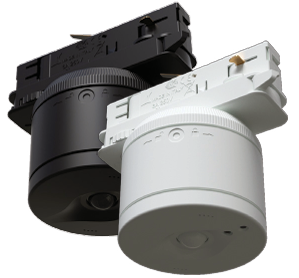
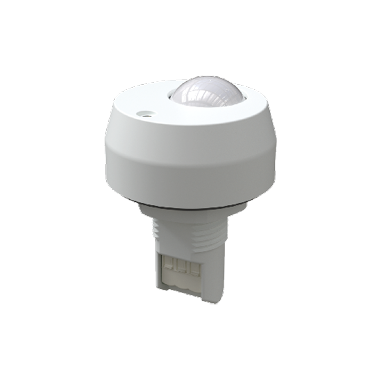
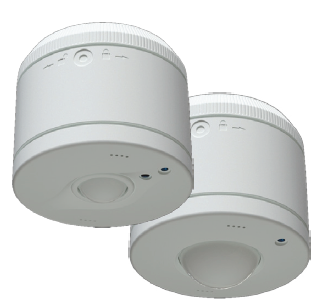
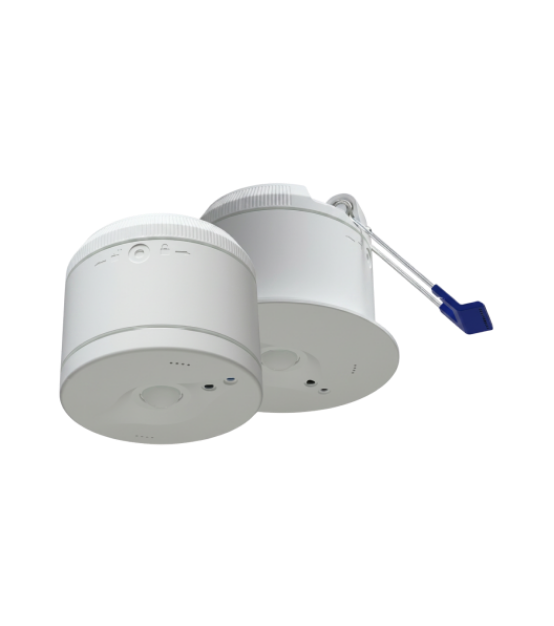
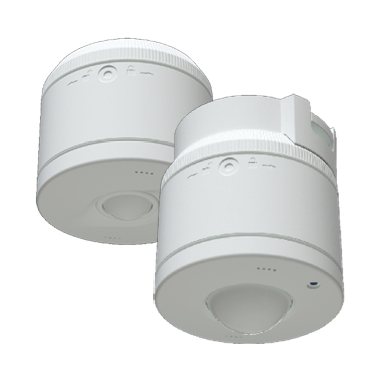
ZETAQLAB sensors are designed to collect and transmit key data for lighting automation. By detecting presence, movement, and ambient light levels, these devices allow the system to dynamically adapt lighting behavior based on real conditions.
In a typical application, the sensor detects occupancy and automatically activates lighting, adjusting brightness according to natural daylight availability. This approach enhances visual comfort while significantly reducing energy consumption.
ZETAQLAB multisensors combine multiple functions—such as motion detection and light sensing—into a single device, simplifying installation and improving overall system efficiency.
Wireless sensors: Zigbee and Casambi
ZETAQLAB wireless sensors operate on a 2.4 GHz mesh network, enabling fully cable-free lighting control systems. By combining Zigbee Direct and Bluetooth (Casambi) technologies, devices communicate in a distributed architecture that ensures high scalability.
This approach allows sensors to be installed directly inside luminaires or as standalone devices, while still enabling fast and intuitive configuration via mobile apps. The absence of dedicated wiring makes these solutions particularly suitable for retrofit projects, where existing systems need to be upgraded without structural interventions.
Another key advantage is the ability to interface with DALI devices, creating hybrid systems where the wireless sensor acts not only as a data acquisition element but also as an active control node, managing groups of luminaires and bridging different technologies.
DALI‑2 sensors (wired systems)
In environments requiring centralized and highly structured control, ZETAQLAB DALI‑2 sensors provide a robust and reliable solution. Based on a wired bus architecture, these devices ensure precise and stable operation of lighting systems.
Within a DALI‑2 system, sensors act as input devices that detect parameters such as occupancy and light levels, transmitting this data to the control system. This enables consistent and programmable automation, making these solutions particularly suitable for industrial, logistics, and office environments.
Thanks to the standardization of the DALI‑2 protocol, sensors can be integrated with servers, modules, and other devices, ensuring high interoperability and long-term scalability.
Hybrid architectures: the value of integration
One of the main strengths of ZETAQLAB solutions is the ability to combine wireless and wired technologies within the same system. Sensors can communicate wirelessly while simultaneously controlling local groups of DALI devices, creating a distributed yet coordinated architecture.
This approach enables highly flexible system design, where technologies are not alternatives but complementary elements. The result is an infrastructure that can adapt to different environments, evolve over time, and meet specific project requirements without rigid constraints.
Application areas
ZETAQLAB sensors are used across a wide range of professional environments. They are commonly applied in industrial and logistics settings to optimize warehouse and production lighting, in offices to improve visual comfort, in retail to enhance space design, and in hospitality to create dynamic lighting scenarios.
Their flexibility makes them suitable both for new installations and energy retrofitting projects, where improving system performance without invasive interventions is essential.
Frequently Asked Questions - Sensors
What is the difference between Zigbee/Casambi sensors and DALI‑2 sensors?
Zigbee and Casambi sensors communicate wirelessly and are ideal for flexible and fast installations, while DALI‑2 sensors use a wired bus and are better suited for structured systems requiring centralized control and long-term reliability.
Can ZETAQLAB sensors be used in existing systems?
Yes, especially in their wireless versions. Zigbee and Casambi solutions allow upgrades to existing installations without the need for new wiring, making them ideal for retrofit projects.
What parameters do the sensors measure?
ZETAQLAB sensors mainly detect presence, movement, and ambient light levels, providing the data needed to automatically regulate lighting and optimize energy consumption.
Can wireless sensors be integrated with DALI systems?
Yes, wireless sensors can interact with DALI devices and control them directly, enabling the creation of hybrid systems that combine the flexibility of wireless communication with the reliability of wired infrastructure.